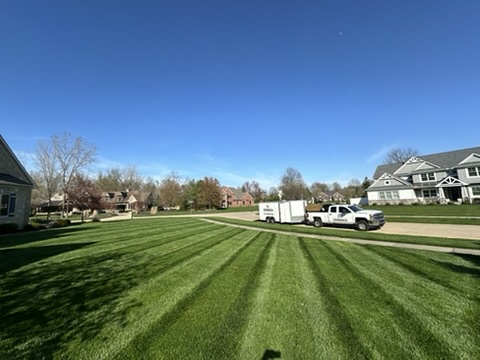
Fall leaves are one of the most recognizable parts of October in Northeast Ohio, but they can also create lawn-care problems when they accumulate for too long. A few scattered leaves generally are not the concern. Problems develop when layers of leaves remain on the turf, covering the grass and changing the conditions at the soil surface. For homeowners considering leaf removal Ohio lawn care, understanding why timely cleanup matters can make it easier to decide when leaves need attention. Doskoch Lawn Care & Landscaping Services includes spring and fall cleanup among its landscaping services.
Grass does not immediately stop functioning when autumn arrives. Cool-season lawns can remain active during fall, which means they still benefit from access to sunlight, air, and appropriate moisture. Removing excessive leaf accumulation is therefore more than a cosmetic task. It is part of preparing a lawn for colder weather.
Why Is Leaving Leaves on Grass a Problem?
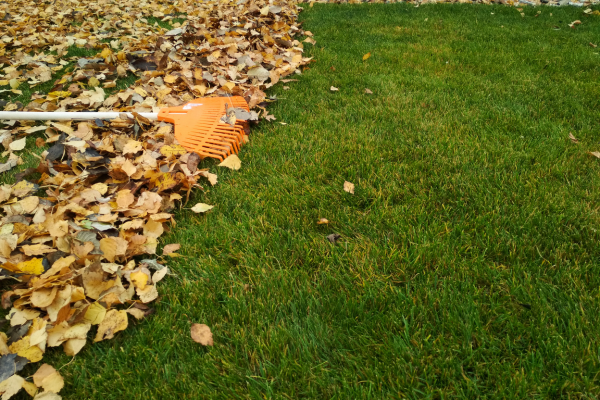
A heavy layer of fallen leaves can form a physical barrier over the lawn. As leaves overlap and become wet, they may create dense mats that limit the amount of light and air reaching the grass below.
For leaf removal Ohio lawn maintenance, timing matters because leaves usually accumulate gradually. A lawn that looks mostly clear one week may be covered after additional leaf drop or windy weather.
The goal does not have to be keeping every blade of grass completely leaf-free at all times. Instead, homeowners should pay attention to significant accumulation and avoid allowing thick layers to remain on the lawn for extended periods.
Leaves Can Block Sunlight From Reaching Grass
Grass depends on light for photosynthesis. When a dense layer of leaves covers the turf, less sunlight reaches the grass underneath.
This can be particularly relevant in autumn because daylight is already becoming shorter. A lawn covered by leaves receives even less exposure during the remaining growing season.
Regular leaf removal Ohio lawn maintenance keeps large accumulations from continuously shading the turf. Homeowners interested in the broader seasonal needs of their grass can also review these seasonal lawn care tips for Northeast Ohio homeowners.
Wet Leaves Can Restrict Air Movement
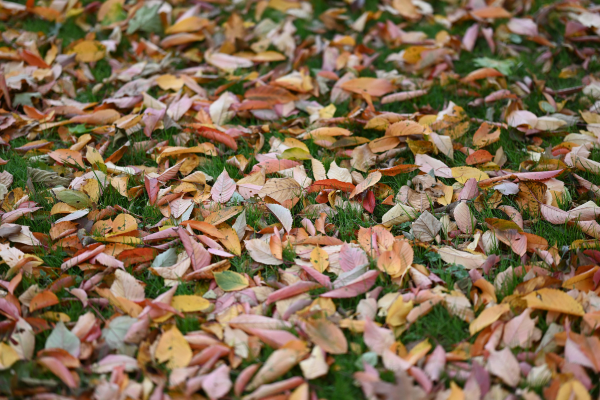
Dry leaves may remain loose when they first fall, but rain and moisture can cause them to settle together.
Once leaves become matted, air circulation around the grass can decrease. Moisture may also remain trapped beneath the leaf layer longer than it would on an uncovered lawn.
This combination can create unfavorable growing conditions. Removing accumulated leaves allows the turf surface to remain more exposed to normal airflow and drying.
Leaf Coverage Can Affect Moisture Conditions
Leaves do not simply block light. A thick layer can also change how moisture behaves at the lawn surface.
Wet leaves may hold moisture against the turf and slow evaporation. At the same time, a dense covering can interfere with the normal interaction among rainfall, soil, grass, sunlight, and air.
For leaf removal Ohio lawn care, this is another reason to focus on preventing heavy accumulation rather than waiting until all trees have finished dropping their leaves.
Matted Leaves Can Flatten Grass
Wet leaves can become heavier as they collect on the lawn. When they form a dense mat, the grass underneath may become pressed down.
Flattened turf has less exposure to light and air, and prolonged coverage can leave sections of the lawn looking stressed once the leaves are finally removed.
October weather in Northeast Ohio can include repeated periods of rain and falling leaves, so checking the lawn periodically can help homeowners identify areas where accumulation is becoming excessive.
Leaf Buildup Can Hide the Condition of Your Lawn
A covered lawn is difficult to inspect.
Leaves may conceal thin turf, bare areas, sticks, branches, and other debris. Removing them gives homeowners a clearer view of lawn conditions before winter and helps reveal areas that may need attention during the appropriate season.
For lawns that already have thin areas, Doskoch’s guide on when to overseed an Ohio lawn explains the role overseeding can play in improving turf density.
Do You Need to Remove Leaves Every Day?
No. Daily removal is generally unnecessary for most residential lawns.
The more useful approach is to monitor how quickly leaves are accumulating. Properties with numerous mature trees may need attention more frequently than properties with limited tree cover.
Weather also matters. Dry, scattered leaves may not create the same immediate concern as a thick layer that has become wet and matted.
A practical leaf removal Ohio lawn routine therefore depends on actual lawn conditions rather than following one rigid schedule for every property.
Should You Wait Until Every Leaf Has Fallen?
Waiting until every tree is completely bare can allow leaves to remain on portions of the lawn for too long.
Leaf drop does not happen all at once. Different trees lose their leaves at different rates, and wind can move leaves from one section of a property to another.
Periodic cleanup can prevent heavy layers from building up while the fall season continues. Doskoch’s article on fall bed edging and cleanup also discusses seasonal debris removal as part of preparing a property for winter.
Leaf Removal Is Part of a Larger Fall Cleanup
Leaves rarely represent the only debris accumulating during autumn. Twigs, small branches, and plant material can also collect throughout a property.
A broader fall cleanup may address lawn areas and landscape beds rather than treating leaf removal as an isolated task. Doskoch’s service information confirms that its seasonal cleanup work includes leaf cleanup, debris removal, bed cleanouts, and hauling.
For leaf removal Ohio lawn maintenance, combining leaf removal with general seasonal cleanup can make it easier to inspect the property before winter.
What About Leaves in Landscape Beds?
Leaves in landscape beds require a slightly different approach than leaves sitting directly on turf.
Some organic material can play a role in landscapes, but large accumulations may cover plants, obscure bed edges, or make seasonal maintenance more difficult. The appropriate amount of cleanup depends on the plants and conditions within each bed.
The main concern for lawns is preventing dense layers from remaining directly over grass. Landscape beds should be evaluated according to their own plant material and maintenance needs.
How Leaf Cleanup Helps With Spring Lawn Appearance
Fall cleanup cannot guarantee what a lawn will look like in spring. Winter conditions, drainage, turf health, soil conditions, and other factors also influence how grass emerges from dormancy.
However, removing excessive leaves eliminates one avoidable source of stress before winter.
A lawn that enters winter without a heavy layer of wet, matted leaves is not being subjected to prolonged shading and restricted airflow from that debris. This makes leaf removal Ohio lawn care a sensible component of seasonal maintenance rather than simply an appearance-focused chore.
Avoid Forgetting Hard-to-See Areas
Leaf accumulation is not always evenly distributed across a property.
Wind can push leaves into:
- Corners near fences
- Areas around shrubs
- Edges of landscape beds
- Spaces beside structures
- Low spots in the yard
These areas may develop thick leaf piles even when the center of the lawn looks relatively clear.
Walking the entire property during cleanup can help identify these concentrated areas before leaves become wet and compacted.
When Should Fall Leaf Removal End?
There is no single date when leaf cleanup must end because tree species, weather, and property conditions vary.
In Northeast Ohio, homeowners can continue monitoring their lawns as trees shed leaves throughout the fall. The final cleanup is often less about a particular calendar date and more about making sure significant debris is not left covering the grass as the landscape transitions toward winter.
That flexibility is important when developing a leaf removal Ohio lawn maintenance plan because autumn conditions can change from year to year.
Make Leaf Removal Part of Your Fall Lawn Routine
Leaves are a natural part of autumn, but thick accumulations do not need to remain on the grass. Timely leaf removal Ohio lawn maintenance helps preserve access to sunlight and airflow, prevents wet leaves from matting over turf, and makes it easier to inspect the lawn before winter. Instead of waiting for every leaf to fall, homeowners can monitor accumulation and remove excessive coverage as needed throughout the season.
If you need help keeping your property clear of leaves and seasonal debris, explore Doskoch Lawn Care & Landscaping Services’ fall cleanup and lawn care services or contact the team. Call 216-516-2668 to discuss fall cleanup and leaf removal for your Northeast Ohio property.
Frequently Asked Questions
1. How long can leaves stay on a lawn before they become a problem?
There is no single safe amount of time because weather, moisture, leaf volume, and lawn conditions vary. The main concern is allowing leaves to form a thick, wet, matted layer over the grass. Homeowners should monitor accumulation throughout fall and remove excessive coverage rather than relying on a fixed schedule.
2. Do I need to remove every leaf from my lawn?
No, a lawn does not necessarily need to be completely free of every individual leaf. The greater concern is significant accumulation that blocks sunlight, limits airflow, or becomes matted when wet. Regular leaf removal Ohio lawn maintenance can focus on preventing heavy coverage rather than keeping the property completely leaf-free at all times.
3. Why are wet leaves worse for grass than scattered dry leaves?
Wet leaves can settle together and create a dense layer over the turf. This covering may restrict airflow, reduce sunlight exposure, hold moisture near the grass, and flatten the turf underneath. Checking the lawn after rainy periods can help homeowners identify areas where leaves have become compacted.
4. Should I wait until all the leaves have fallen before cleaning my lawn?
Not necessarily. Waiting for every tree to become bare may allow early-falling leaves to remain on the grass for an extended period. Periodic cleanup during autumn can prevent excessive accumulation, especially on properties with multiple trees that shed their leaves at different times.
5. Can fallen leaves cause bare or thin areas in a lawn?
Heavy leaf coverage may contribute to turf stress by limiting the sunlight and airflow available to the grass. However, thin or bare areas can have many possible causes, including growing conditions, drainage, soil conditions, and lawn health. Removing accumulated leaves eliminates one potential source of seasonal stress.
6. Does leaf removal help prepare a lawn for winter?
Yes, removing excessive leaf accumulation can be a useful part of preparing a lawn for winter. It keeps thick, matted debris from covering the grass and makes it easier to inspect the turf before colder weather arrives. Leaf removal Ohio lawn care is commonly combined with other seasonal property cleanup tasks.
7. Where should I check for hidden leaf buildup?
Homeowners should check along fences, around shrubs, beside structures, near landscape bed edges, and in low areas where wind may collect leaves. These locations can develop dense piles even when open portions of the lawn appear relatively clear.
8. Can leaving leaves on the lawn affect spring appearance?
Excessive leaf coverage may affect spring lawn appearance if grass spends extended periods beneath dense, wet, matted leaves. Removing heavy accumulation reduces prolonged shading and restricted airflow, but it cannot guarantee how the lawn will look in spring because winter weather, drainage, soil, and turf health also influence spring conditions.
9. Is leaf removal different from a complete fall cleanup?
Yes, leaf removal focuses specifically on fallen leaves, while a fall cleanup may address additional seasonal debris and landscape areas. Depending on the property, cleanup can include leaves, twigs, branches, and debris that have accumulated in lawns or landscape beds as the growing season ends.
10. When should I stop removing leaves for the season?
Leaf removal can generally continue as long as significant leaf accumulation is occurring and conditions allow for cleanup. There is no universal end date because different trees shed at different times and Northeast Ohio weather varies. The goal is to avoid leaving substantial leaf coverage over the lawn as winter approaches.

Nic Doskoch is the owner of Doskoch Lawn Care & Landscaping Services LLC, founded in 2018 and based in Avon, Ohio. Serving Northeast Ohio, Nic and his team specialize in a full range of landscaping and property maintenance services, including lawn care, landscape design, hardscaping, mulching, sod installation, and snow plowing. Known for quality craftsmanship and exceptional customer service, Nic has built a trusted reputation by transforming outdoor spaces with attention to detail and a commitment to client satisfaction.