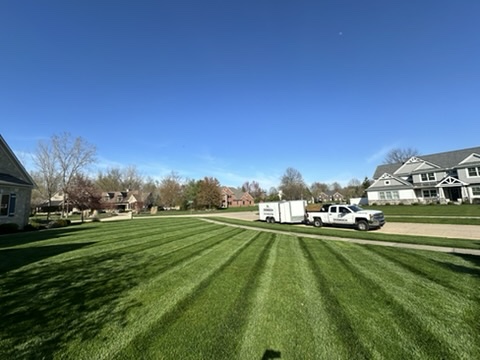
A lush, green lawn is something many Ohio homeowners take pride in. But even with regular mowing and watering, bare spots and thinning grass can develop over time. Ohio’s changing seasons, heavy clay soils, foot traffic, pests, and lawn diseases can all contribute to patchy turf.
If you’re noticing areas of exposed soil or grass that looks weak and sparse, the good news is that these issues can often be corrected with the right approach and proper timing.
Before you can fix the problem, it’s important to understand what caused it. In Ohio, several common factors contribute to lawn thinning and bare patches:
Why Bare Spots And Thin Grass Happen In Ohio
1. Soil Compaction
Ohio soils often contain a high percentage of clay. Clay soil drains slowly and compacts easily. When soil becomes compacted, grass roots struggle to access oxygen, water, and nutrients. This weakens turf and can cause thinning over time.
2. Heavy Foot Traffic
Backyard play areas, dog paths, and frequently used walkways can wear down turf. Repeated pressure damages grass blades and compacts soil beneath the surface.
3. Seasonal Stress
Ohio experiences hot, humid summers and cold winters. Summer heat can stress cool-season grasses, while winter freeze-thaw cycles may damage root systems. Snow mold and other winter-related issues can also create bare patches by early spring.
4. Improper Watering
Both underwatering and overwatering can harm grass. Too little water causes drought stress. Too much water can encourage fungal diseases and shallow root growth.
5. Lawn Diseases And Pests
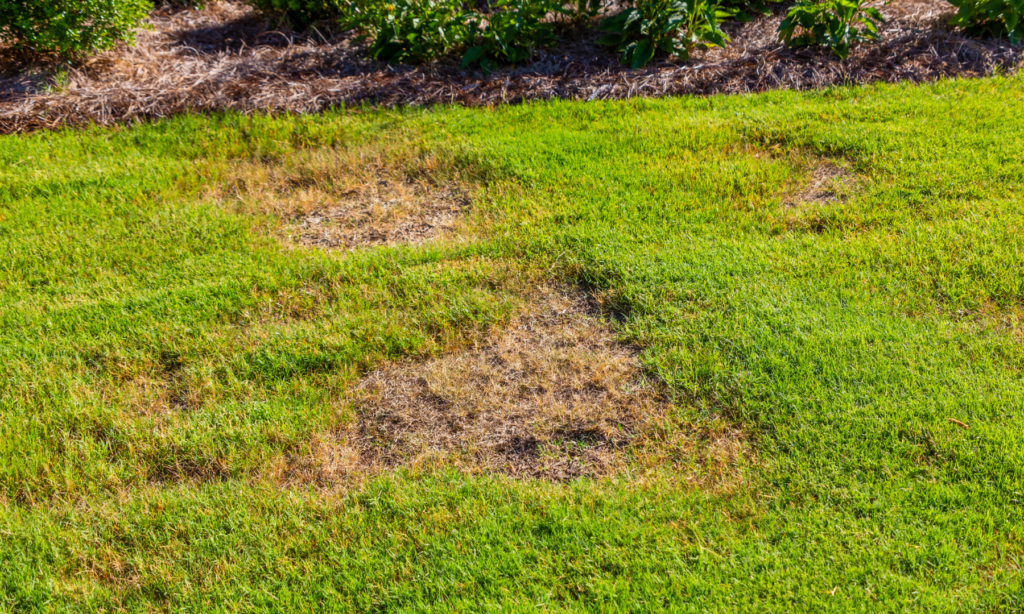
Fungal diseases such as brown patch and dollar spot are common in humid conditions. Grubs can feed on grass roots, causing turf to loosen and die off in sections.
6. Poor Soil Quality Or Nutrient Imbalance
Grass needs balanced nutrients to thrive. If soil lacks key nutrients or has improper pH levels, growth may be thin and uneven.
Identifying the underlying cause is critical. Treating symptoms without addressing the root problem often leads to recurring issues.
Best Time To Repair Thin Grass In Ohio
Timing plays a major role in lawn repair success.
In Ohio, the best time to fix bare spots and overseed thin grass is typically late summer to early fall. During this period:
- Soil is still warm, which encourages seed germination
- Air temperatures are cooler, reducing stress on new seedlings
- Weed pressure is lower than in spring
- Rainfall is generally more consistent
Early spring is another option, but spring seeding often competes with weed growth and may struggle during summer heat.
Step-By-Step Guide To Fix Bare Spots
If you have isolated bare patches, follow these steps carefully.
Step 1: Remove Dead Grass And Debris
Use a rake to remove dead grass, thatch buildup, rocks, and debris. Loosen the top layer of soil so new seed can make direct contact with it. Good seed-to-soil contact is essential for germination.
Step 2: Loosen Compacted Soil
If the soil feels hard, use a hand cultivator or garden fork to break up the surface. Loosening improves airflow and water penetration.
Step 3: Add Topsoil Or Compost If Needed
If soil is poor or eroded, apply a thin layer of quality topsoil or compost. This improves structure and nutrient availability. Avoid piling soil too thick, as grass needs sunlight to grow properly.
Step 4: Choose The Right Grass Seed For Ohio
Ohio lawns commonly use cool-season grasses, including:
- Kentucky bluegrass
- Perennial ryegrass
- Fine fescue
- Turf-type tall fescue
Select a seed blend suited to your lawn’s sunlight conditions (full sun vs. shade). Using high-quality seed improves long-term results.
Step 5: Apply Seed Evenly
Spread seed evenly over the prepared area according to package instructions. Avoid overcrowding seed, as this can create competition among seedlings.
Step 6: Lightly Cover The Seed
Gently rake the area to ensure seed makes contact with soil. A thin layer of straw or compost can help retain moisture, but do not bury seed deeply.
Step 7: Water Properly
Keep soil consistently moist but not saturated during germination. Light, frequent watering is better than heavy soaking during the early stage. Once seedlings establish, transition to deeper, less frequent watering.
Step 8: Limit Traffic
Avoid walking on newly seeded areas until grass is well established.
How To Repair Thin Grass Across Larger Areas
If your lawn looks generally thin rather than having isolated bare spots, overseeding is usually the best solution.
1. Dethatch If Necessary
Thatch is a layer of dead grass between soil and living turf. A thin layer is normal, but excessive thatch prevents water and nutrients from reaching roots. If thatch buildup is heavy, dethatching may help.
2. Aerate Compacted Soil
Core aeration removes small plugs of soil, relieving compaction and improving root growth. In Ohio’s clay-heavy soils, aeration is often beneficial before overseeding.
3. Apply Seed With A Broadcast Spreader
Spread seed evenly over the lawn. After seeding, lightly rake or drag the lawn to improve soil contact.
4. Water Consistently
As with spot repairs, keep soil moist during germination.
5. Fertilize Appropriately
A starter fertilizer may help support early growth. Always follow label directions to avoid overapplication.
Addressing Underlying Problems
Seeding alone will not solve recurring bare spots if the underlying issue remains.
Correct Compaction
If your lawn frequently becomes compacted, annual aeration may be helpful.
Improve Drainage
Standing water can damage grass roots. Grading adjustments or drainage solutions may be necessary in persistent wet areas.
Adjust Mowing Practices
Mowing too short weakens grass and exposes soil to weed invasion. Cool-season grasses in Ohio generally perform better when maintained at a height of about 2.5 to 4 inches, depending on the species.
Water Deeply And Infrequently
Established lawns typically benefit from deeper watering sessions rather than frequent shallow watering. This encourages stronger root systems.
Conduct Soil Testing
A professional soil test can identify nutrient deficiencies or pH imbalance. Correcting soil chemistry helps grass grow thicker and more resilient.
Preventing Future Bare Spots
Repairing thin grass is only part of the solution. Long-term lawn health requires consistent care.
Maintain Proper Fertilization Schedule
Cool-season grasses benefit from fall fertilization, which supports root growth and recovery from summer stress.
Manage Weeds Early
Weeds compete with grass for sunlight, nutrients, and water. Maintaining dense turf naturally helps limit weed intrusion.
Control Grubs When Necessary
If sections of turf lift easily from the soil, grubs may be present. Proper identification is important before treatment.
Reduce Traffic Stress
If certain pathways experience repeated wear, consider adding stepping stones or redirecting foot traffic.
Monitor For Disease
Fungal issues often develop in humid conditions. Watering early in the morning rather than evening can reduce prolonged moisture on blades.
Common Mistakes To Avoid
Many lawn repair attempts fail because of simple errors:
- Seeding at the wrong time of year
- Skipping soil preparation
- Overwatering or underwatering
- Ignoring compaction
- Choosing the wrong grass variety
- Mowing too soon after seeding
Avoiding these mistakes significantly improves your results.
When Professional Lawn Care May Help

While many homeowners can repair minor bare spots themselves, larger lawn issues may benefit from professional evaluation. A landscaping professional can:
- Identify underlying soil or drainage problems
- Recommend appropriate grass blends
- Perform aeration and overseeding efficiently
- Develop a customized lawn maintenance plan
Doskoch Lawn Care & Landscaping Services works with Ohio homeowners to restore lawn density, improve soil conditions, and promote long-term turf health using proven, region-appropriate practices.
Areas That We Doskoch Lawn Care & Landscaping Services Serve, Include:
- Avon Ohio 44011
- Avon Lake Ohio 44012
- Bay Village Ohio 44140
- Fairview Park 44126
- Lakewood Ohio 44107
- North Olmsted 44070
- North Ridgeville 44039
- Olmsted Falls Ohio 44138
- Rocky River Ohio 44116
- Westlake Ohio 44145
Fixing Bare Spots And Thin Grass In Ohio
If you’re unsure why your lawn is thinning or want expert support in restoring its health, the team at Doskoch Lawn Care & Landscaping Services is available to help. With a focus on practical, region-specific lawn solutions, they assist Ohio homeowners in building greener, stronger lawns season after season. Call 440-482-9699 or visit our website!
Common FAQs About Lawn Care
1. What Causes Bare Spots And Thin Grass In Ohio?
Bare spots and thin grass in Ohio are commonly caused by soil compaction, heavy foot traffic, seasonal stress, improper watering, lawn diseases, pests such as grubs, and poor soil quality or nutrient imbalance. Identifying the root cause is important before starting repairs.
2. Why Is Soil Compaction A Problem For Lawns?
Ohio soils often contain clay, which compacts easily. Compacted soil limits grass roots’ access to oxygen, water, and nutrients, weakening the turf and contributing to thinning or bare patches.
3. When Is The Best Time To Fix Bare Spots In Ohio?
Late summer to early fall is typically the best time to repair bare spots and overseed thin lawns in Ohio. Soil remains warm for seed germination, air temperatures are cooler, and weed pressure is lower compared to spring.
4. Can I Seed My Lawn In The Spring?
Yes, early spring is another option for seeding. However, spring seeding may compete with weed growth and young grass can struggle during summer heat.
5. What Types Of Grass Grow Well In Ohio?
Ohio lawns commonly use cool-season grasses such as Kentucky bluegrass, perennial ryegrass, fine fescue, and turf-type tall fescue. The best choice depends on your lawn’s sun and shade conditions.
6. How Should I Prepare A Bare Spot Before Seeding?
Remove dead grass, debris, and thatch. Loosen compacted soil, add a thin layer of topsoil or compost if needed, and ensure good seed-to-soil contact before watering consistently.
7. How Often Should I Water Newly Seeded Areas?
Keep the soil consistently moist during germination without oversaturating it. Light, frequent watering works best initially. Once grass establishes, transition to deeper, less frequent watering.
8. What Is Overseeding And When Should I Do It?
Overseeding involves spreading grass seed across an existing thin lawn to improve density. It is typically done in late summer or early fall, often after dethatching and aerating compacted soil.
9. What Mowing Height Is Recommended For Ohio Lawns?
Cool-season grasses in Ohio generally perform best when maintained at a height of approximately 2.5 to 4 inches, depending on the grass species. Mowing too short can weaken grass and expose soil to weeds.
10. When Should I Contact A Professional Lawn Care Company?
If bare spots continue to return, soil or drainage issues are suspected, or large areas of the lawn are thinning, a landscaping professional can evaluate the problem, recommend appropriate grass blends, perform aeration and overseeding, and develop a long-term lawn maintenance plan.

Nic Doskoch is the owner of Doskoch Lawn Care & Landscaping Services LLC, founded in 2018 and based in Bay Village, Ohio. Serving Northeast Ohio, Nic and his team specialize in a full range of landscaping and property maintenance services, including lawn care, landscape design, hardscaping, mulching, sod installation, and snow plowing. Known for quality craftsmanship and exceptional customer service, Nic has built a trusted reputation by transforming outdoor spaces with attention to detail and a commitment to client satisfaction.